Best Exercises for Bone Health | Move Beyond
Best Exercises for Bone Health (Why Walking Alone Isn't Enough)
If you've started walking more to look after your bones, that's a genuinely good habit. But if bone health is the specific goal, walking alone probably isn't going to move the needle much. Bone is living tissue, and like muscle, it only gets stronger when it's asked to do more than it's used to. A gentle daily walk rarely asks that much of it.
This matters more than most people realise. Around 6.3 million Australians are living with low bone density, and 1.2 million of those have osteoporosis, often without knowing it until a fracture happens. Bone loss doesn't usually come with symptoms. It's often called the "silent" side of ageing, which is exactly why understanding what actually helps is worth ten minutes of your time.
Why walking doesn't do much for bone density
Bone responds to mechanical stress. When a bone is loaded beyond what it's used to, it triggers a process where the body lays down new bone tissue to reinforce itself. This is a good thing, and it's the whole logic behind bone-strengthening exercise.
The problem with walking is that most of us are already walking. Our bones have adapted to that load a long time ago, so continuing to do more of the same rarely provides a new stimulus. Walking is excellent for cardiovascular health, joint mobility and general wellbeing, and it shouldn't be dropped. It's just not enough on its own if bone density is the specific target.
What tends to work better falls into three categories:
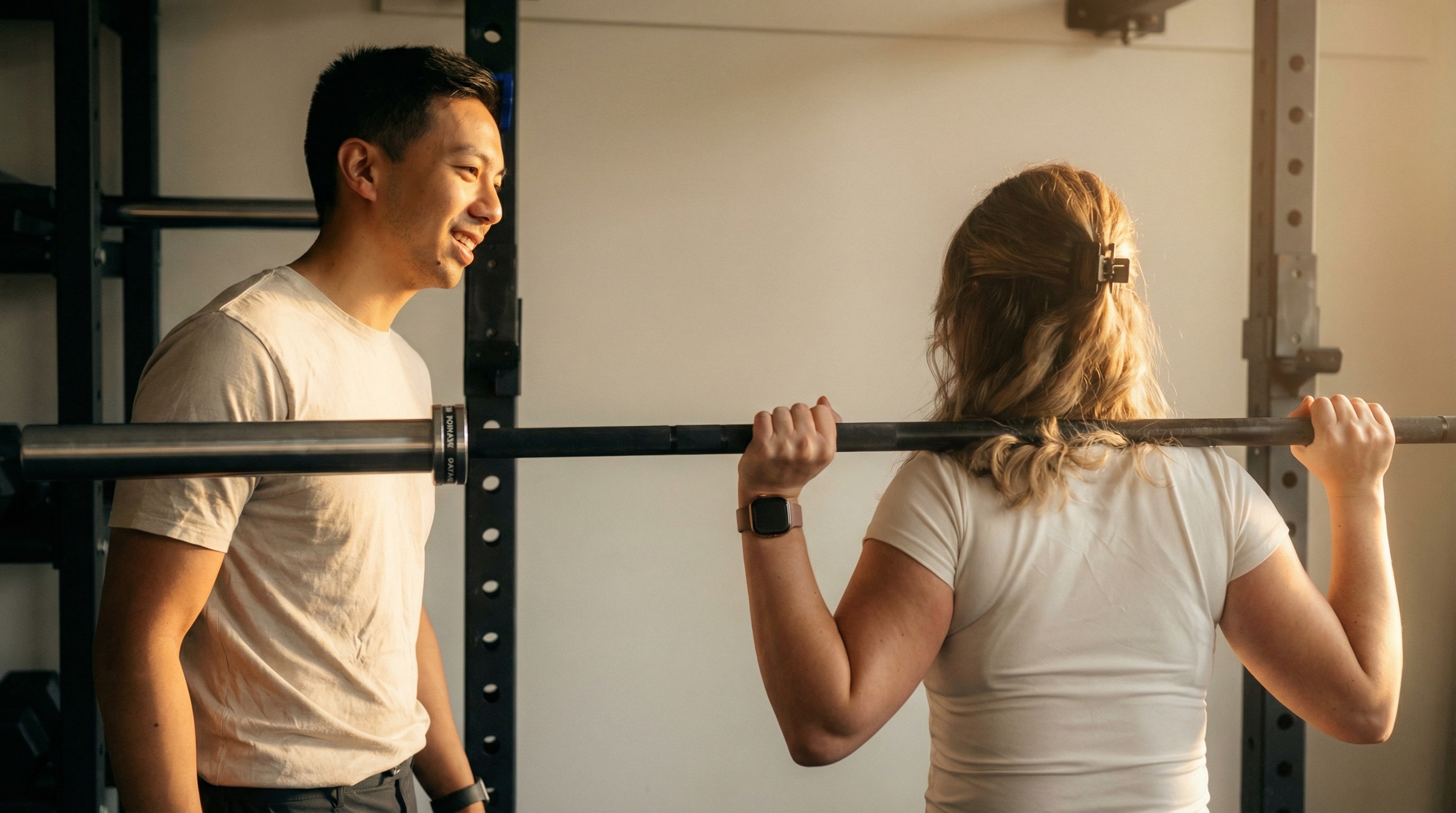
Progressive resistance training. Lifting weights that get gradually heavier over time, targeting major muscle groups. As muscles pull on bone during a lift, that tension is one of the strongest signals bone tissue responds to.
Impact loading. Activities that involve landing forces, such as jumping, hopping, skipping or heel drops. These create a different type of stress than walking, one that's been shown to be particularly effective for hip and spine bone density when introduced safely and progressively.
Balance and stability work. This doesn't build bone directly, but it matters just as much. Most fractures happen because of a fall, not because bones simply give way. Training balance reduces fall risk, which is often the more urgent problem for people with lower bone density.
A well-rounded program usually blends all three, though the right mix and starting intensity depends a lot on your current bone health, age, and any injury history.
Who should pay closer attention to this
Bone density naturally declines with age for everyone, but some groups have a higher priority to be proactive:
Postmenopausal women, due to the drop in oestrogen that accelerates bone loss
Men and women over 50, particularly with a family history of osteoporosis or a previous minor fracture
People who've had long-term corticosteroid use, or certain chronic conditions affecting bone metabolism
Anyone who has been told they have osteopenia or osteoporosis following a bone density (DEXA) scan
If any of these apply to you, it's worth a conversation with your GP about whether a bone density scan is appropriate, particularly if you haven't had one.
Why "just lifting weights" isn't quite the same as bone-specific training
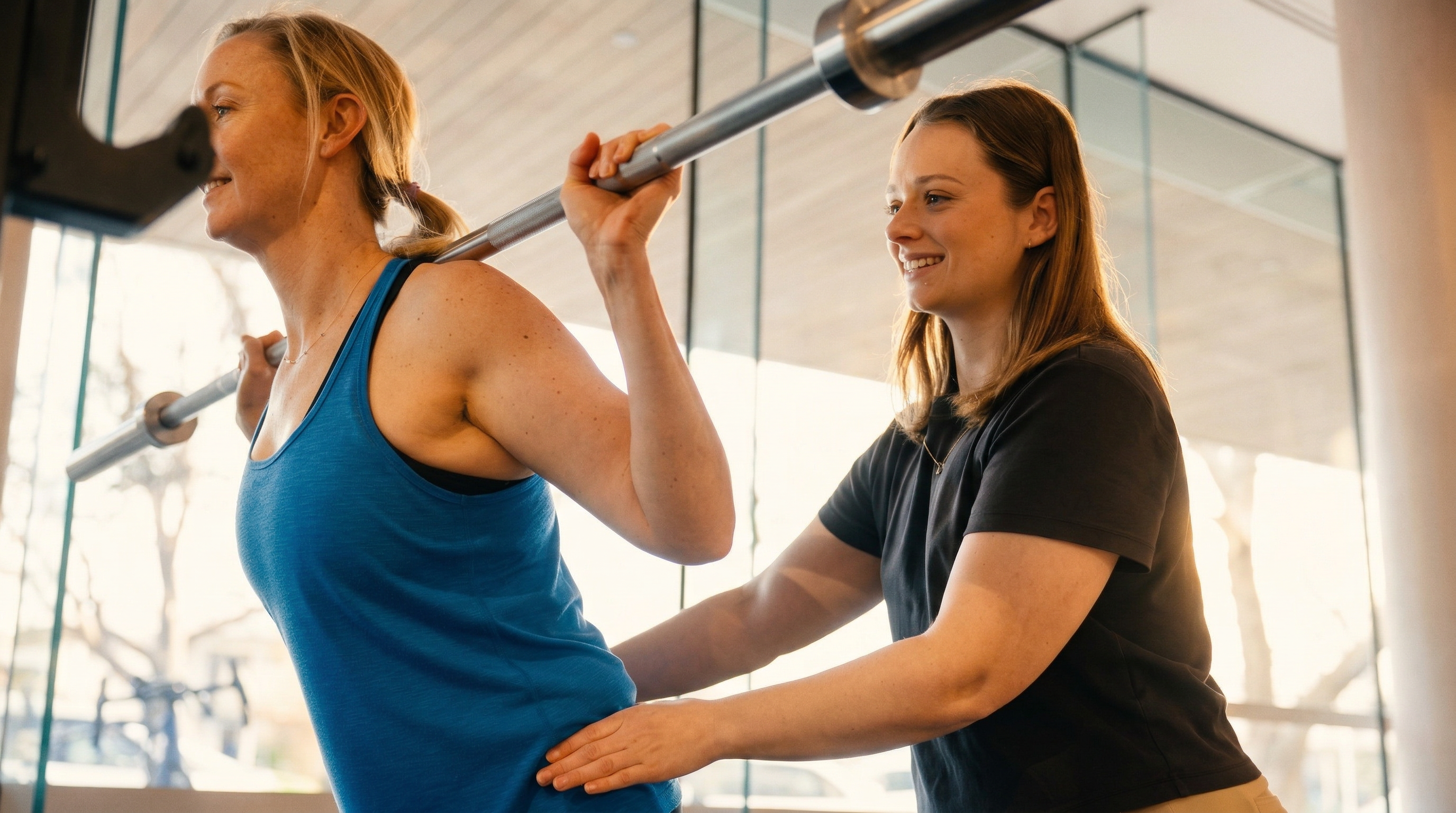
General strength training is genuinely good for you and will help to some degree. But building bone density specifically, especially once density is already reduced, usually calls for a different approach than a standard gym program. The loading needs to be progressive, high enough intensity to create a genuine stimulus, and closely monitored, particularly around impact-based exercises if someone already has a fragility risk.
This is the exact gap that evidence-based, clinically supervised programs like Onero are designed to close. Rather than a generic circuit, sessions are built around your individual bone health, strength and mobility, with resistance and impact training progressed carefully over time by a physiotherapist or exercise physiologist trained in the approach.
For people who don't specifically need that level of supervision but still want structured, progressive strength work, a program that bridges rehab-level guidance with genuine strength gains, like our Clinical Strength classes, can be a good starting point, and something to discuss with your practitioner if bone health is part of the picture.
The takeaway
Movement matters for your bones, but not all movement is equal. Walking is a great foundation, but resistance training, impact loading and balance work are what actually give bone tissue a reason to adapt. If you've had a low bone density result, have risk factors, or simply want to be proactive about your bone health as you age, it's worth getting a proper assessment rather than guessing at a program on your own.