
Running Assessment Findon
Running Assessment in Findon
/Findon
Running injuries are extremely common. Research suggests up to 80% of runners sustain an injury in any given year. But most running injuries are not random. They come from somewhere: a training error, a strength deficit, a technique factor that has gone unaddressed. All of these can be identified and modified.
At Move Beyond Findon, our running assessments are led by physiotherapists and podiatrists who are trained in running biomechanics and who, many of them, are runners themselves. We want to keep you running as much as possible while we help you address the problem. That means a real plan, not just rest and hope.
We use a Zebris instrumented treadmill for all running assessments. With 7,000 pressure sensors embedded in the belt, it gives us live, objective data on your foot strike, loading pattern, cadence, and force through every step, allowing us to identify the factors driving your injury or inefficiency with a level of detail that standard video analysis alone cannot match. What to expect at your running assessment
Your first appointment runs for 60 minutes. Here is how it is structured:
History and goals. We start by understanding you. How long have you been running, what does your training look like, what has gone wrong, and what do you want to get back to. If you have had previous imaging or physio notes, bring those along.
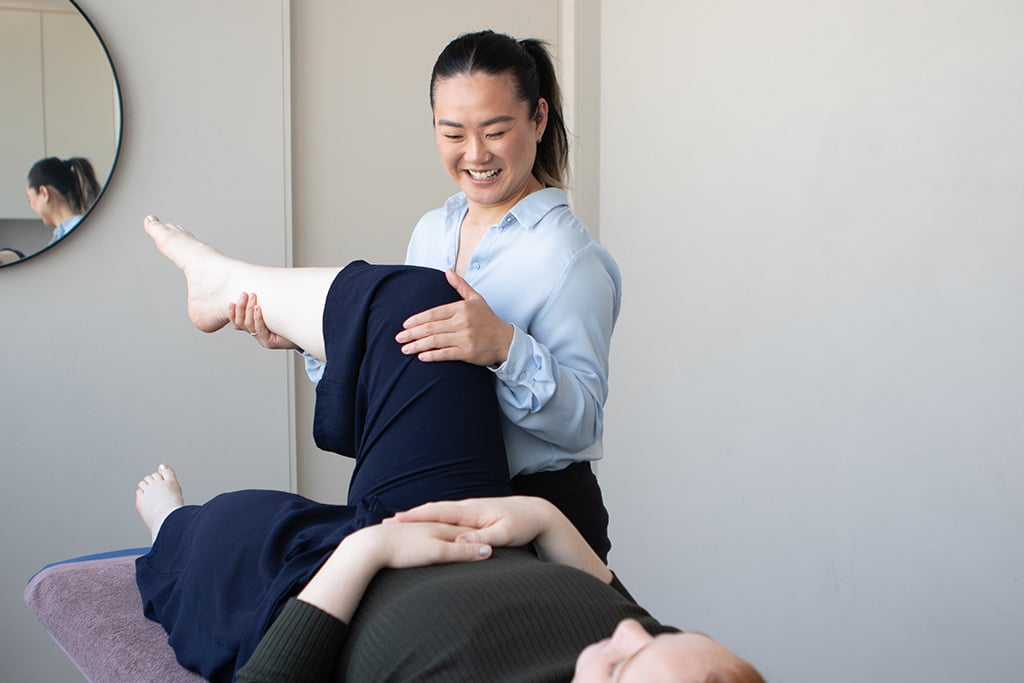
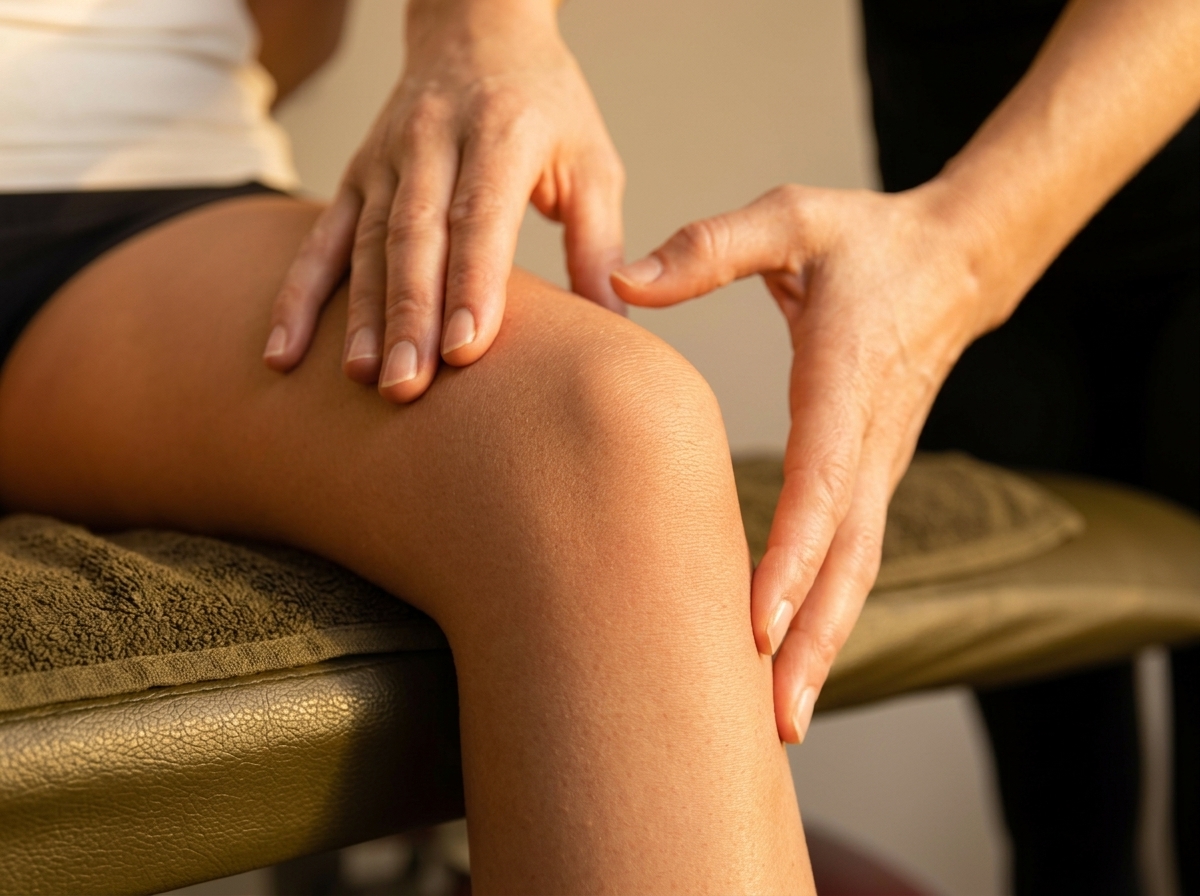
Off-treadmill assessment. Before we look at how you run, we look at how you move. We assess your strength, flexibility, and joint mobility through the hips, knees, ankles, and feet to identify any deficits that may be contributing to your injury or your running pattern.
Zebris treadmill analysis. You run on our Zebris treadmill while we capture real-time pressure and force data alongside video footage. We can compare you barefoot versus in your shoes, assess the effect of orthotics, look at left-right loading symmetry, and analyse how your mechanics change at different speeds.
Findings and plan. We walk you through what we found in plain language and build a plan with you. This will cover your diagnosis or a clear explanation of what is driving your problem; exercises targeting the specific strength and mobility gaps we identified; technique cues and any running modifications worth making; training load guidance covering how much to run, when to ease off, and how to build back safely; and a referral to another practitioner if it would help.
On that last point: our physio and podiatry teams work closely together at all SA clinics. If your problem has a foot and ankle component that podiatry can address, or a strength issue that exercise physiology or physiotherapy could target more specifically, we will make that connection for you. The goal is a plan that actually gets you back to running, and keeps you there.

Who is a running assessment for
A running assessment is useful for a much wider range of people than most runners realise. It is not just for people with serious injuries. Some of the most common reasons people book include:
A recurring injury that keeps coming back no matter what they do
Pain that has been building gradually over weeks or months
Coming back to running after surgery, pregnancy, or a long break
A beginner who wants to start well and avoid the common mistakes
An experienced runner preparing for a marathon, ultra, or triathlon who wants to manage their load smarter
Someone whose injury has been diagnosed but who wants to understand the biomechanical factors behind it
If you run and something is not right, or you want to make sure it does not become not right, a running assessment is the right starting point. Running conditions our Findon team may help with
Shin splints (medial tibial stress syndrome)
Stress fractures of the foot or shin
Achilles tendinopathy
Patella tendinopathy (jumper's knee)
Plantar fasciitis
ITB syndrome (lateral knee pain)
Patellofemoral syndrome (runner's knee)
Calf and tibialis posterior pain
Hip and glute injuries
Ankle pain and instability
Blisters and footwear issues
ACL rehabilitation and return to running
Post-surgical return to running
Anti-Gravity Treadmill Rehabilitation at Findon
For runners and patients managing more serious injuries or recovering from surgery, our Findon clinic also has an Anti-Gravity Treadmill. This is a piece of technology used by AFL clubs, NBA programs, and elite athletes worldwide, and it is available to our Findon community as part of a physiotherapy-supervised rehabilitation program.
The Anti-Gravity Treadmill uses differential air pressure to reduce the load going through your legs and joints while you walk, jog, or run. You wear a pair of specially designed shorts and zip into a sealed chamber at waist height. The air lifts you, reducing your effective bodyweight from as low as 20% up to your full 100%, in precise increments. Crucially, you are still moving the way you normally move. The mechanics are the same. The load is simply reduced to a level your body can safely handle at that stage of recovery.
This makes the Anti-Gravity Treadmill one of the most valuable tools we have for post-surgical rehabilitation, stress fracture management, and return to running after significant injury. It allows us to begin movement and running rehabilitation earlier than traditional approaches allow, which generally means better outcomes, less deconditioning, and a faster return to full function.
For endurance athletes with high training loads, it also provides a way to continue running at volume without the cumulative stress that leads to overuse injury.
Who is the Anti-Gravity Treadmill suitable for at Findon?
ACL reconstruction rehabilitation
Total knee or hip replacement recovery
Ankle surgery recovery
Knee meniscectomy
Hip arthroscopy
Stress fractures of the foot or shin
Achilles tendinopathy
Patellar tendinopathy
Plantar fasciitis
Hip and knee osteoarthritis
Neurological conditions affecting gait
High-volume training load management for endurance athletes

Move Beyond Findon Clinic Contact Details

166 Grange Road, Findon SA 5023

(08) 8340 4932


Opening Hours
Mon-Thu: 9am-7pm
Fri: 9am-6pm
Sat: 8am-12pm
Sun: Closed

Bus stop directly out the front at Stop 16 on Grange Road (Side South). Also a short walk from bus stops on Holbrooks Road and Crittenden Road.

Free on-site parking directly in front of the clinic.
Book Findon
Need help with making an appointment?
The Client Experience Team at Move Beyond is here to assist. If you are having trouble booking online or would prefer a different method, please reach out below:
Findon Running Assessment and Anti-Gravity Treadmill FAQs
What is included in a running assessment at Move Beyond Findon?
Your running assessment at our Findon clinic is a 60-minute appointment. It covers a thorough history of your injury, training, and running goals; a strength and movement assessment off the treadmill; and a live running analysis on our Zebris treadmill with 7,000 pressure sensors capturing real-time data on your foot strike, loading pattern, cadence, and force through each step. At the end of the session, your practitioner will walk you through your findings clearly and build a plan with you, covering what treatment is needed, what exercises to start, how to modify your training, and whether a referral to another practitioner, such as a podiatrist or physiotherapist, would help you reach your goals faster.
Who should get a running assessment?
A running assessment is valuable for anyone who runs and wants to stay injury-free, anyone managing a running-related injury that keeps returning, and anyone coming back to running after a break or surgery. It suits beginners who want to start with good habits, recreational runners managing persistent niggles, and experienced athletes who want to improve efficiency or manage a heavy training load. You do not need to be injured to benefit.
What will my plan look like after the assessment?
After your running assessment at Findon, your practitioner will put together a clear plan tailored to where you are right now and what you are working toward. This will typically include a diagnosis or explanation of what is driving your pain or inefficiency; specific exercises targeting the strength or mobility gaps identified; guidance on your running technique and any changes worth making; training load recommendations covering how much to run, when to back off, and how to build back up safely; and where appropriate, a referral to another Move Beyond practitioner. Our physio and podiatry teams work closely together, so if your problem has a foot and ankle component that would benefit from podiatry assessment, or a strength deficit that an exercise physiologist could address more specifically, we will make that introduction. The goal is not just to fix what is wrong right now, but to make sure it does not come back.
What should I bring to my running assessment?
Please bring your regular running shoes and the clothing you usually run in. We want to assess your actual setup, not something different. If you have had relevant imaging, referrals, or previous physiotherapy or podiatry notes, bring those along. GPS watch data or training logs are also helpful if you have them.
What is the Zebris treadmill and what makes it different?
The Zebris treadmill has 7,000 pressure sensors embedded in the belt, giving us live, objective data on your foot strike pattern, loading symmetry, cadence, ground contact time, and force distribution through each foot with every step. This is a level above standard video analysis alone. It picks up subtle asymmetries and loading patterns that are difficult to see on video but that often drive injury and inefficiency. It also lets us compare data barefoot, in different shoes, and with or without orthotics, and to track changes objectively over time as your technique and strength improve.
Can a running assessment help with a recurring injury?
Yes, and this is one of the most common reasons people book at our Findon clinic. If the same injury keeps returning, it usually means the underlying cause has not been fully addressed. Our assessment looks at the whole picture so we can identify and work on what is actually driving the problem, not just manage it each time it flares up.
Do I need a referral for a running assessment?
No referral is needed. You can book directly with our Findon team online or by phone. If you are claiming through a Chronic Disease Management plan, Return to Work SA, DVA, or CTP, please call us before your appointment so we can set things up correctly.
Is a running assessment covered by private health insurance?
Yes, running assessments performed by a physiotherapist or podiatrist are claimable under most private health extras policies. You can claim on the day using our on-site HICAPS terminal. Your rebate will depend on your fund and level of cover.
What does a running assessment cost at Move Beyond Findon?
For our most up-to-date fees, please call the clinic on (08) 8340 4932. We accept private health insurance (HICAPS on-site), Medicare CDM plans (gap applies, we do not bulk bill), Return to Work SA, DVA, CTP, and NDIS (plan-managed and self-managed). We are a cashless practice, payment via Visa or Mastercard.
What is the Anti-Gravity Treadmill and how does it work?
Our Anti-Gravity Treadmill uses differential air pressure to reduce the percentage of body weight going through the treadmill, allowing you to walk, jog, or run at anywhere from 20% to 100% of your bodyweight. You wear a pair of specially designed shorts and zip into a sealed chamber at waist height. The air pressure is adjusted to your prescribed level, reducing the load through your legs and joints while you move with completely normal mechanics. Unlike pool running or cycling, you are still running the same way you normally would. The load is simply reduced to a level your body can safely handle at that point in your recovery.
Who is the Anti-Gravity Treadmill suitable for?
The Anti-Gravity Treadmill at our Findon clinic is suitable for anyone who needs to reduce load through their lower limbs while maintaining movement and fitness. This includes people recovering from surgery such as ACL reconstruction, knee or hip replacement, or ankle procedures; people managing stress fractures, tendinopathies, or osteoarthritis; and endurance athletes who want to maintain high training volume while managing injury risk. It is also used to support people with neurological conditions affecting gait.
How early can I start using the Anti-Gravity Treadmill after surgery?
This depends on your specific surgery and your surgeon's guidelines. In many cases we can begin Anti-Gravity Treadmill sessions earlier than traditional return-to-running programs allow, because the reduced load means joints and healing tissue are not stressed beyond what they can handle. Your physiotherapist will work within your surgical team's instructions and progress you based on your strength, pain levels, and tissue healing.
Can competitive or high-volume runners use the Anti-Gravity Treadmill?
Yes. Many competitive and endurance athletes use the Anti-Gravity Treadmill to maintain running volume during injury without overloading healing tissue, or as a way to run at loads above their normal bodyweight as a training stimulus. If you are building toward a marathon, ultra, or triathlon and want to manage your load carefully, ask our team whether it is a good fit for your program.
Ready to start your
journey to freedom
Ready to take the next step in your health journey? Our Team may help, Book an appointment or call.


We’ll send you only what matters — no noise, no spam.