
Clinical Pilates Grange
Private Clinical Pilates in Grange
Looking for Pilates that is part of your rehab, not just a workout? At Move Beyond Grange, Clinical Pilates is delivered 1:1 by our physiotherapists in a private session, on the reformer or the mat, and is built around your body, your injury and your goals.
We don't run group classes at Grange. Every session is one-on-one with your physio, who uses Pilates-based exercise as part of your physiotherapy rehab to rebuild strength, stability, mobility and confidence in movement, adjusting your program as you progress.
Before you start, you'll have an initial physiotherapy assessment so your physio can assess your strength and movement, identify any areas of weakness or restriction, and plan your program with you. From there, your 1:1 Pilates sessions become part of your treatment plan. We recommend weekly sessions to get the best results.
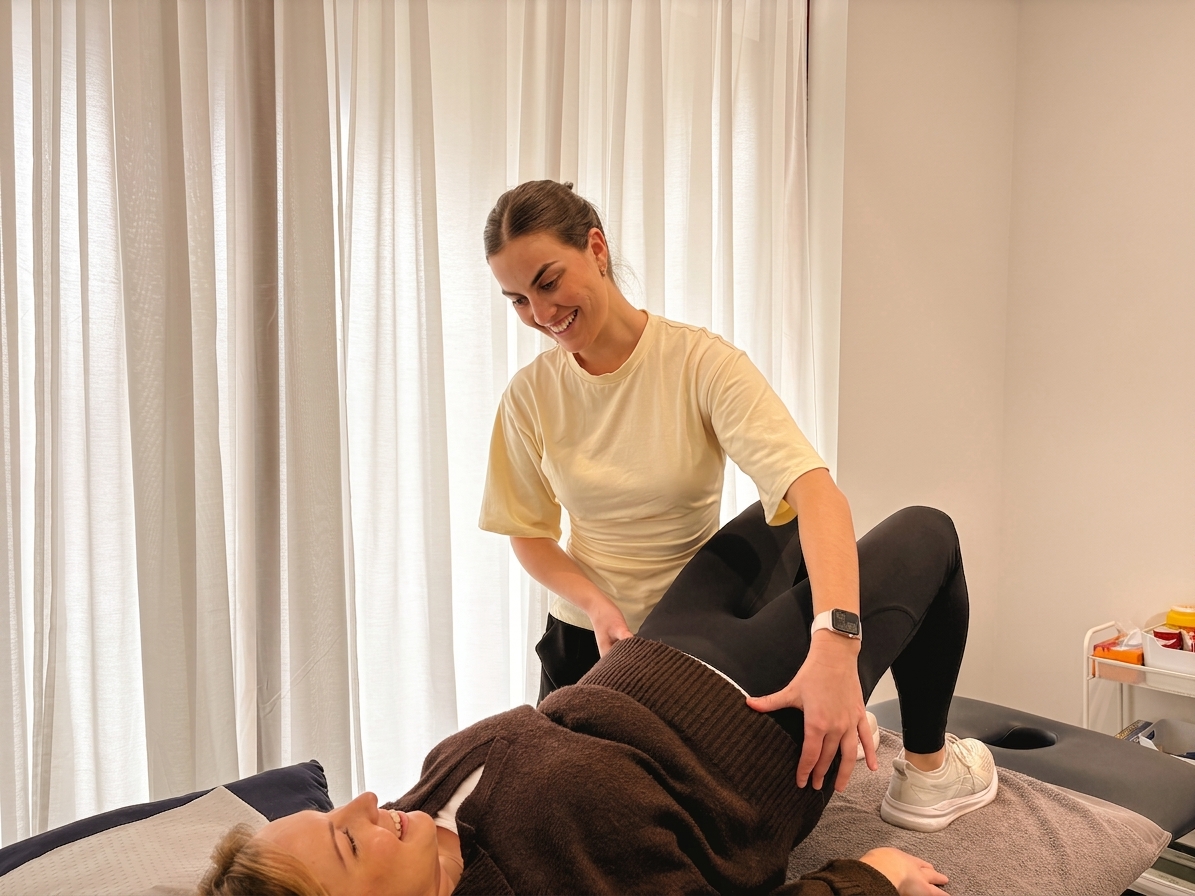
Your private sessions take place at our Frederick Road clinic in Grange, one-on-one with your physio on the reformer or the mat.

Our Grange Clinical Pilates may help with
Lower back pain
Pre and postnatal conditions
Pelvic floor and pelvic health
Post-operative rehabilitation
Sports, dance and running injuries
Neck pain and headaches
Postural dysfunctions
Return to sport and gym
Arthritis
Strength and injury prevention
Our Pilates Grange may help with
Postural dysfunctions:
Identifying and correcting movement imbalances that contribute to poor posture, tension, and long-term discomfort.
Sports, dance and running injuries:
Reformer and mat-based rehab to rebuild strength, improve mechanics and get you back to the sport, dance or running you love.
Lower back pain:
Targeted core activation and spinal stability work to reduce pain and build the strength needed for lasting relief.
Neck pain and headaches:
Building deep neck and upper back strength and better postural control to ease neck pain and reduce how often headaches flare.
Arthritis:
Low-impact, joint-friendly movement to improve mobility, reduce stiffness, and support quality of life.
Pre & postnatal
Gentle, practitioner-guided movement to support your changing body through pregnancy and help you recover safely postpartum.
Pelvic floor and pelvic health:
Core and pelvic floor focused Pilates, guided by our pelvic health physios, to support continence, prolapse management and core recovery.
Post-operative rehabilitation:
Safe, progressive strengthening after surgery, with every exercise matched to your surgeon's guidelines and your stage of recovery.
Injury prevention (prehabilitation):
Proactive conditioning designed to address weaknesses before they become injuries, ideal for active people and athletes.
Return to sport and gym:
Bridging the gap between rehab and full training, so you return to sport or the gym stronger and with confidence.
Meet the Grange Team

Adriel Maranan
Physiotherapist
Clinical interests in all sorts of Running-related injuries, Low Back Pain, and Return to sport (running)

Despina Kybouris
Physiotherapist
Clinical interests in Dance injuries, TMD (jaw), headaches, neck and back pain.

Eden van Balen
Physiotherapist
Clinical interests in all sorts of Neck pain & Headaches, Lower back pain and Maternal health

Hannah Zwar
Physiotherapist
Clinical interests in Headaches and Neck Pain, Pregnancy and Post-Natal Conditions and Post-Operative Rehabilitation. Hannah is currently on Parental leave

Holly Watkins
Physiotherapist
Clinical interests in Return to sport/gym, Headaches, Pregnancy.

Megan Watson
Physiotherapist
Clinical interests in Pelvic Health, Pregnancy and Post Partum Care, Oncology Physiotherapy

Rebecca Corena
Physiotherapist
Clinical interests in Pre & Postnatal Musculoskeletal Conditions, Headaches and Neck Dysfunction, Lower Back and Hip Dysfunction

Move Beyond Grange Contact Details

1/178 Frederick Road GRANGE, SA 5022


Opening Hours
Monday: 9am–7pm
Tuesday: 7am-7pm
Weds Thursday: 9am–7pm
Friday: 7.30am–5:00pm
Saturday: Closed
Sunday: Closed

Bus Stop 30 on Frederick Road is right outside — the 136 route connects directly to the city. East Grange train station on the Grange line is also a short walk away, with trains running into Adelaide city roughly every hour.

Free on-site parking directly in front of the building.
Book Grange
Need help with making an appointment?
The Client Experience Team at Move Beyond is here to assist. If you are having trouble booking online or would prefer a different method, please reach out below:
FAQs
What is the difference between Clinical Pilates and regular Pilates?
Clinical Pilates is a therapeutic form of Pilates designed and supervised by a qualified physiotherapist rather than a fitness instructor. At Move Beyond Grange, every program starts with a physiotherapy assessment, so your exercises are prescribed specifically for your body, your injury history and your goals. Regular studio Pilates follows a general class plan; Clinical Pilates is individualised from the first session.
Do I need a referral to start Clinical Pilates in Grange?
No referral is needed. You can book online or call us on (08) 8356 1379. A GP referral is only required if you'd like to use a Chronic Disease Management (CDM) plan for a Medicare rebate, which your GP needs to arrange before treatment starts. Private health insurance, WorkCover and DVA can all be used without a referral.
What happens at my first appointment?
Your first step is an initial physiotherapy assessment with one of our Grange physios. They'll review your health history and goals, assess how you move, and identify areas of strength, weakness and restriction. From there, they'll build your rehab plan with you, including 1:1 Clinical Pilates sessions where they'll help you most.
Do you run group Pilates classes at Grange?
Not at Grange. Here, Clinical Pilates is delivered as private 1:1 sessions with your physio, as part of your rehab. If you'd prefer a group reformer class, our neighbourhood studio Like Fred runs classes designed by allied health practitioners and often taught by our physios. If you're unsure which is right for you, your physio can help you decide.
What equipment do you use in Clinical Pilates?
At Grange, your 1:1 sessions use the reformer and mat-based exercises. Your physio will choose the right equipment and exercises for your program based on your assessment findings and goals, and adjust them as you progress.
Is Clinical Pilates suitable for people with injuries or chronic pain?
Yes. Clinical Pilates is particularly well suited to people managing injuries, chronic pain or complex movement conditions. Because every session at Grange is one-on-one with your physio, exercises can be modified continuously as your capacity changes. It is commonly used at our Grange clinic for lower back pain, neck pain and headaches, pelvic floor dysfunction, pre and postnatal conditions, sports injuries and post-surgical recovery.
Can I do Clinical Pilates if I'm pregnant or recently had a baby?
Yes. Clinical Pilates can be safely adapted throughout pregnancy and the postnatal period under the guidance of your physio. Our Grange team has a particular interest in pregnancy and postnatal care, from managing pelvic girdle pain and lower back pain during pregnancy to rebuilding core and pelvic floor strength and addressing abdominal separation after birth. Let us know when booking so we can match you with the right physio.
How is Clinical Pilates different from a standard physio appointment?
At Grange, 1:1 Clinical Pilates is part of your physiotherapy care rather than a separate class. A standard physio appointment may focus more on hands-on treatment, dry needling, cupping or advice, while a Clinical Pilates session focuses on guided, equipment-based exercise to build strength, control and confidence. Many clients combine both, and your physio will help you decide the right mix for your situation.
How often should I attend Clinical Pilates sessions?
We recommend at least one session per week to see meaningful progress, and twice per week where possible. Consistency is key, as Pilates-based rehab builds on itself, and regular sessions let your physio progress your program safely. Your physio will recommend a frequency that suits your goals and stage of recovery.
Is Clinical Pilates covered by private health insurance or Medicare?
Private health insurance with extras cover typically includes Clinical Pilates delivered by a registered physiotherapist, and you can claim on the day using our HICAPS facilities. Medicare rebates may be available under a Chronic Disease Management (CDM) plan, which must be arranged by your GP before treatment starts. We also support WorkCover and DVA patients. We are a cashless clinic and accept Visa and Mastercard.
What should I wear to Clinical Pilates?
Comfortable, form-fitting activewear works best, as loose clothing can get caught in reformer springs or make it harder for your physio to observe your movement. Grip socks are recommended, and no shoes are worn on the equipment.
Ready to start your
journey to freedom
Ready to take the next step in your health journey? Our Team may help, Book an appointment or call.


We’ll send you only what matters — no noise, no spam.