


Running Assessment Athelstone
Running Assessment in Athelstone
/Athelstone
Running injuries are common, but most of them are not random. They come from somewhere: a training error, a strength gap, a technique habit that has gone unnoticed. All of these can be found and worked on.
At Move Beyond Athelstone, running assessments are led by our clinic director, Joe Keain: an Endorsed Principal Podiatrist, Level 1 running coach, and a runner himself with multiple marathons and ultramarathons behind him. We want to keep you running as much as possible while we help you address the problem. That means a real plan, not just rest and hope.
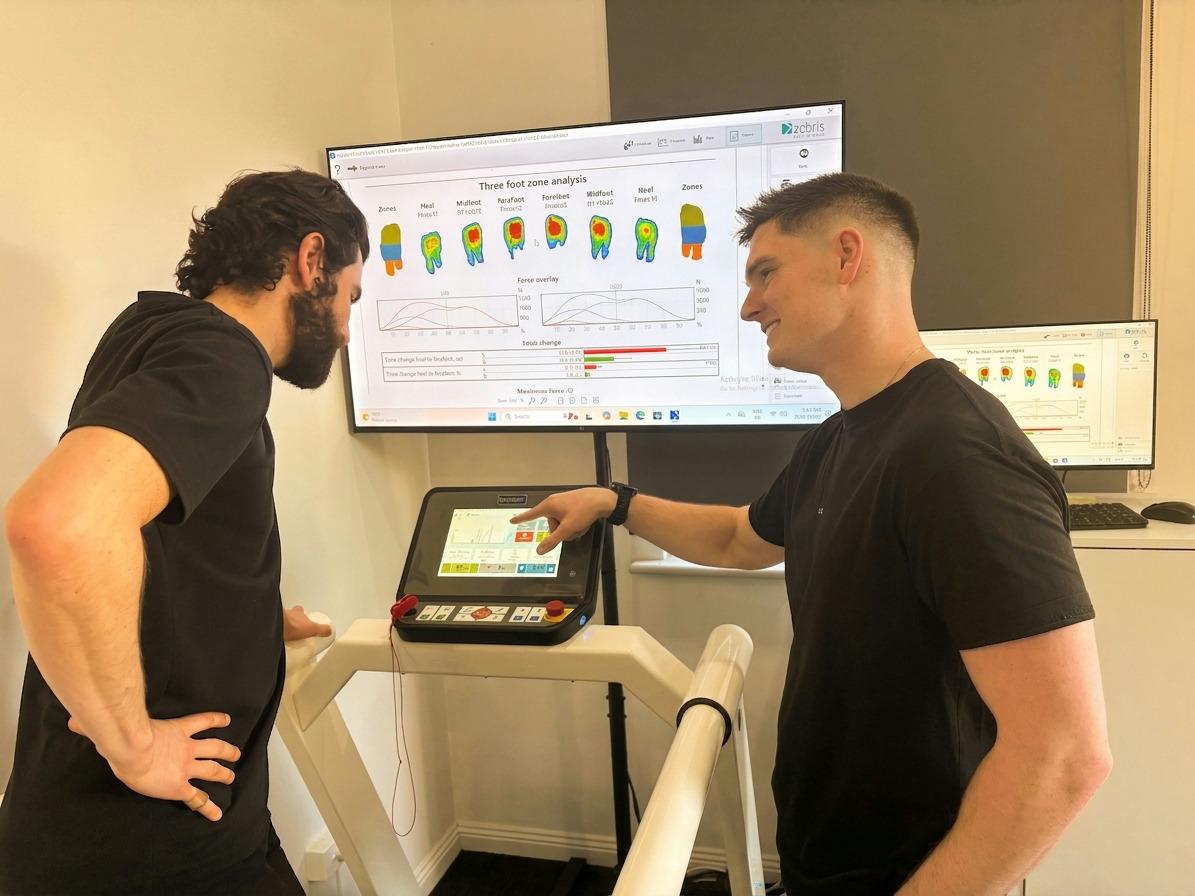
We look at you as a whole runner: your training, your strength, your footwear and how you actually run. For the running part we use a Zebris instrumented treadmill, with pressure sensors built into the belt, so alongside video we see live data on your foot strike, loading pattern, cadence and force with every step.
What to expect at your running assessment
Your first appointment runs for 60 minutes. Here is how it is structured:
History and goals. We start by understanding you. How long have you been running, what does your training look like, what has gone wrong, and what do you want to get back to. If you have had previous imaging or physio notes, bring those along.
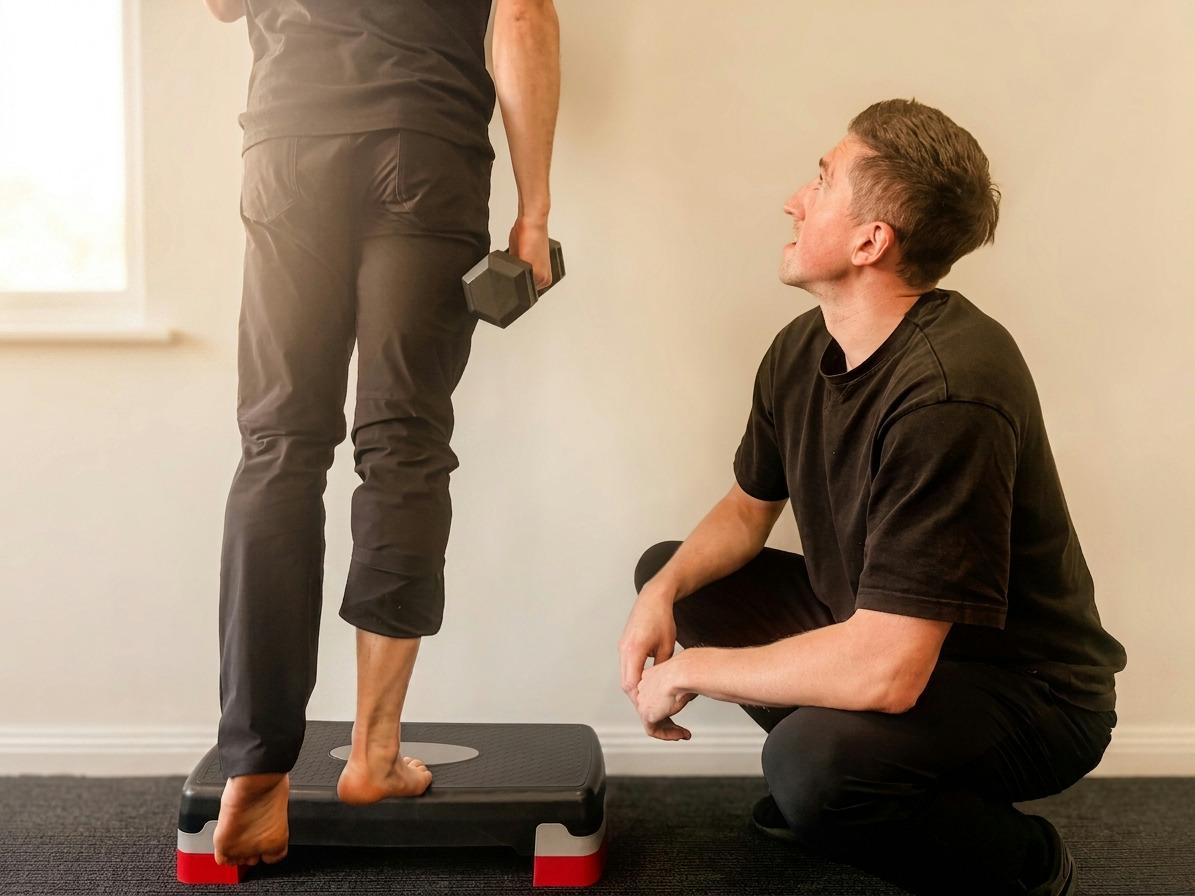
Off-treadmill assessment. Before we look at how you run, we look at how you move. We assess your strength, flexibility, and joint mobility through the hips, knees, ankles, and feet to identify any deficits that may be contributing to your injury or your running pattern.
Zebris treadmill analysis. You run on our Zebris treadmill while we capture real-time pressure and force data alongside video. We can compare you barefoot and in your shoes, look at the effect of orthotics, check left-right loading symmetry, and see how your mechanics change at different speeds.
Findings and plan. We walk you through what we found in plain language and build a plan with you. This will cover your diagnosis or a clear explanation of what is driving your problem; exercises targeting the specific strength and mobility gaps we identified; technique cues and any running modifications worth making; training load guidance covering how much to run, when to ease off, and how to build back safely; and a referral to another practitioner if it would help.
On that last point: our physio and podiatry teams work side by side at Athelstone. If your problem has a foot and ankle component that podiatry can address, or a strength issue that physiotherapy could target more specifically, we will make that connection for you. The goal is a plan that gets you back to running, and keeps you there.
Who is a running assessment for
A running assessment is useful for a much wider range of people than most runners realise. It is not just for people with serious injuries. Some of the most common reasons people book include:
A recurring injury that keeps coming back no matter what they do
Pain that has been building gradually over weeks or months
Coming back to running after surgery, pregnancy, or a long break
A beginner who wants to start well and avoid the common mistakes
An experienced runner preparing for a marathon, ultra, or triathlon who wants to manage their load smarter
Someone whose injury has been diagnosed but who wants to understand the biomechanical factors behind it
If you run and something is not right, or you want to keep it that way, a running assessment is a good place to start.
Running conditions our Athelstone team may help with
Shin splints (medial tibial stress syndrome)
Stress fractures of the foot or shin
Achilles tendinopathy
Patella tendinopathy (jumper's knee)
Plantar fasciitis
ITB syndrome (lateral knee pain)
Patellofemoral syndrome (runner's knee)
Calf and tibialis posterior pain
Hip and glute injuries
Ankle pain and instability
Blisters and footwear issues
ACL rehabilitation and return to running
Post-surgical return to running
Getting back to running after injury or surgery
Coming back from a serious injury, surgery, pregnancy or a long break takes more than a date on the calendar. At our Athelstone clinic, our podiatry and physiotherapy teams build a graded return-to-running plan around you.
We start with what your body can handle now: strength, hopping and loading tests through the foot, ankle, knee and hip. From there we progress you step by step, from walking to walk-run intervals to continuous running, and adjust as you go.
If you have had surgery, we work within your surgeon's instructions and keep them in the loop, so everyone is pointed in the same direction.
For runners training for a marathon, ultra or triathlon, we also help you plan your load around your goal race, so you get to the start line feeling ready.
Who a return-to-running plan suits at Athelstone
ACL reconstruction rehabilitation
Ankle surgery and ankle sprains
Knee arthroscopy
Stress fractures of the foot or shin
Achilles tendinopathy
Patellar tendinopathy
Plantar fasciitis
Returning to running after pregnancy
Returning after a long break
Load planning for endurance events
Visit us in Athelstone
- Address
- 166 Grange Road, Findon, SA 5023
- Phone
- (08) 8340 4932
- Parking
- Free on-site parking directly in front of the clinic.
- Public transport
- Bus stop directly out front - Stop 16: Grange Road (Side South). Also a short walk from bus stops on Holbrooks Rd and Crittenden Rd.
- Opening hours
- Mon–Thu 9am–7pm Fri 9am–6pm Sat 8am–12pm Sun closed
Prefer email? hellosa@movebeyond.com.au
Book a Running Assessment in Athelstone
Loading online booking for Findon…
Athelstone Running Assessment FAQs
Ready to start your
journey to freedom
We open on Gorge Road in January 2027. Book online once bookings open, or give us a call.

Be the first to know
We’ll send you only what matters — no noise, no spam.
© 2026. Move Beyond. All Rights Reserved.