

Freedom Journal
Sign up to receive updates from Move Beyond.
Meniscus Tear: Recovery and Physio Treatment
28 November 2018•3 min read
What Is A Meniscus
In the knee there are two menisci (fibrocartilage pads) that sit between the thigh bone (femur) and the shin bone (tibia).
The medial meniscus sits on your inner-side of the knee joint, and the lateral meniscus on the outer-side of your knee joint.
The menisci act as shock absorbers… So, as you walk, run, jump, hop, etc., your menisci help to absorb the force over the entire knee so that the bone surfaces are not damaged.
What Is A Meniscus Tear
An acute meniscus tear usually occurs through a trauma injury, the most common of which involves twisting on a slightly bent knee.
This is often sports related and a meniscal injury can often occur together with an anterior cruciate ligament (ACL) tear.
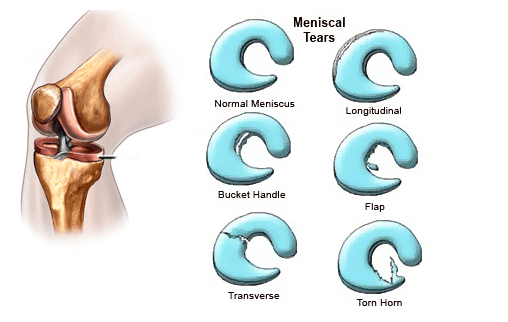
The meniscus can be torn longitudinally, radially, or have a flap or bucket handle appearance.
The medial meniscus is more commonly injured than the lateral meniscus.
In an older population, meniscal tears can occur due to age-related degeneration of the meniscus.
Signs And Symptoms Of A Meniscus Tear
The degree of pain associated with meniscus injuries varies. A small tear may cause no immediate symptoms but typically pain and swelling appear over time (24hrs). Where as a severe meniscal injury can be immediately painful with restricted range of motion in the knee.
The most common symptoms that you have torn your meniscus are
– pain and tenderness along the knee joint line
– swelling of the joint
– clicking, popping, or locking of the knee and
– pain with squatting.
Your physiotherapist will perform tests to determine if there is a meniscal injury. However, not all meniscus injuries are positive on testing, so an MRI scan may be needed to diagnose the injury.
How To Treat A Meniscus Tear
A small meniscus tear, will usually respond well to physiotherapy treatment.
Physiotherapy treatment may include:
Reducing pain, inflammation and swelling
Ultrasound
Soft tissue massage
Manual techniques
Restoring range of motion
Strengthen muscles around the knee
Stretching muscles around the knee to restore length
Progressive return to sport and activity
Meniscus injuries often occur with other knee injuries, which need to be treated in conjunction with the meniscal tear
A meniscal tear will generally take six to eight weeks to recover with treatment. Depending on the size and/or severity of meniscal injury, surgery may be required.
An untreated meniscus tear can deteriorate and cause ongoing pain that affects your every day activities and can lead to you having a prolonged break from weight baring exercise with the affected leg.
What About Surgery For A Meniscus Tear
Around a decade ago, all meniscus tears were destined for surgery. Usually an arthroscope to clean off the rough edges of the tear was required. In more recent years, more doctors and physios are rehabilitating meniscus tears with conservative treatment (meaning hands on physio, inflammation management and exercises).
If surgery is required, surgery is usually performed arthroscopically to either remove the torn fragment or repair a tear in the meniscus.
Following surgery, physiotherapy can assist with rehabilitation and will follow similar guidelines to the non-surgical treatment approach.
Post-surgical physiotherapy will focus on:
Early mobilisation of the knee
Reducing pain and swelling
Restoring range of motion
Graduated weight bearing exercises
Strengthening muscles around the knee
Stretching muscles around the knee to restore length
Progressive return to sport and activity
Meniscus injuries are just one condition that can cause knee pain.

Ready to start your
journey to freedom
Ready to take the next step in your health journey? Our Team may help, Book an appointment or call.


Be the first to know
We’ll send you only what matters — no noise, no spam.
© 2026. Move Beyond. All Rights Reserved.